
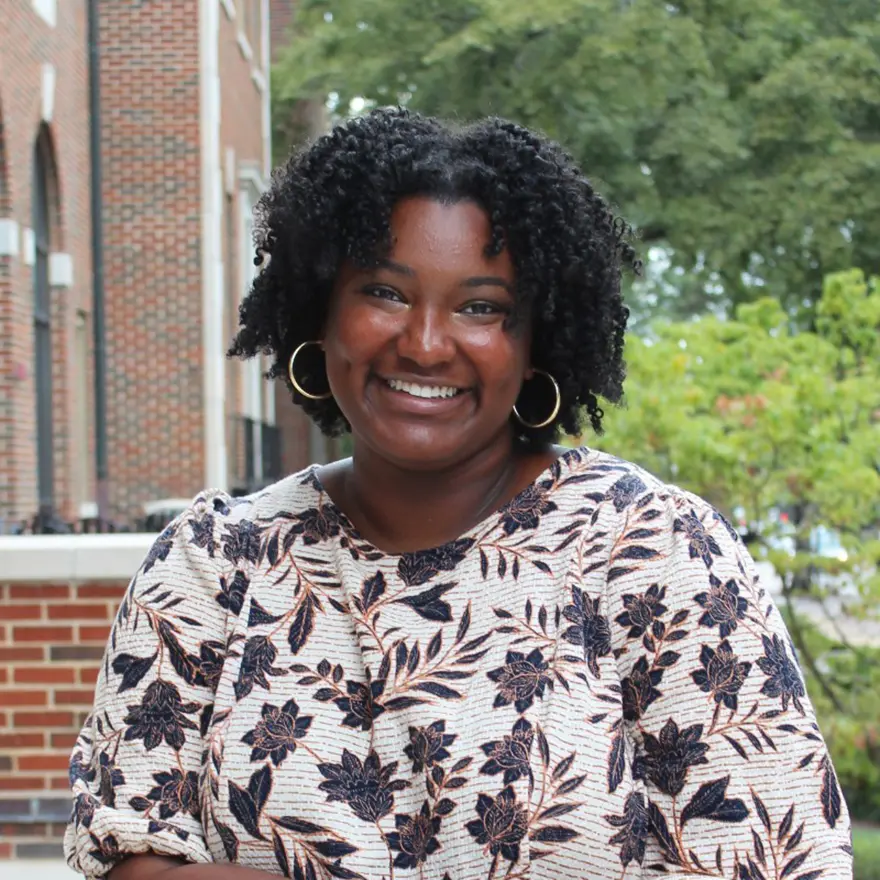
A member of the Blackburn Institute Class of 2020, Trinity Hunter’s connection to Blackburn has only deepened with time. What began as a formative student experience has grown into a lasting commitment rooted in shared values, meaningful relationships, and a belief that people truly make a place. Over the past six years, Trinity has witnessed the Institute evolve alongside its surrounding community, gaining perspective from every role along the way, from new student to student leader and now Advisory Board member. That continuity has shaped Trinity’s identity as a steward of community and reinforced a dedication to service that extends far beyond the Institute.
At the heart of Trinity’s passion for Blackburn is intergenerational networking. The opportunity to learn from individuals across ages, professions, and backgrounds has been both grounding and inspiring, reinforcing the idea that leadership and learning are reciprocal at every stage of life. In her current role, Trinity is especially excited to serve as a connector among students, Fellows, and Advisory Board members, helping strengthen relationships and support initiatives that advance Blackburn’s mission.
One of Trinity’s most meaningful Blackburn experiences was the Urban Travel Experience to Mobile, Alabama, where participants engaged with residents of Africatown. Speaking with descendants of those brought to the United States on the Clotilda left a lasting impression, offering powerful lessons in resilience, courage, and community strength. As a Black woman from Alabama, Trinity found the experience deeply personal and transformative, further fueling her interest in the African diaspora and the ways history continues to shape the present.
Beyond Blackburn, Trinity’s passions span literacy, education, and prison justice reform. She is a strong advocate for accessible learning spaces and has dedicated time to education-focused initiatives while also working alongside community leaders on justice reform efforts. Her graduate thesis explores the experiences of Black women in the Alabama Panhellenic Association through a Black feminist theoretical lens, reflecting her broader commitment to storytelling, identity, and structural change. A lifelong writer and editor, Trinity continues to pursue opportunities that blend creativity, advocacy, and community impact.
Trinity’s journey reflects the enduring influence of the Blackburn Institute and the power of remaining connected to a mission that grows, adapts, and remains firmly rooted in service, which undoubtedly inspired her to run for the Recent Graduate Advisory Board position.